 University IT
Audio and Video
Video and audio materials need accurate captions and transcription to be accessible to the widest range of people possible. Accurate captions are necessary to provide access to people who are deaf or have hearing loss. Captioning and transcription reinforce auditory content by providing the same content over an additional visual channel. This can benefit students who are neurodiverse, have learning disabilities, or are just trying to watch a lecture without headphones in the library. A recent 3Play Media study found that most students find captioning to be helpful.
If you are publishing Canvas content that is publicly available, or the course is broadly available to the Stanford community, then all videos must have accurate captions and audio materials must have accurate transcripts. If the course is not broadly available but the material will be reused it is important to consider captioning and/or transcription for audio/video materials. The content below provides an overview of the benefits of captioning and transcription.
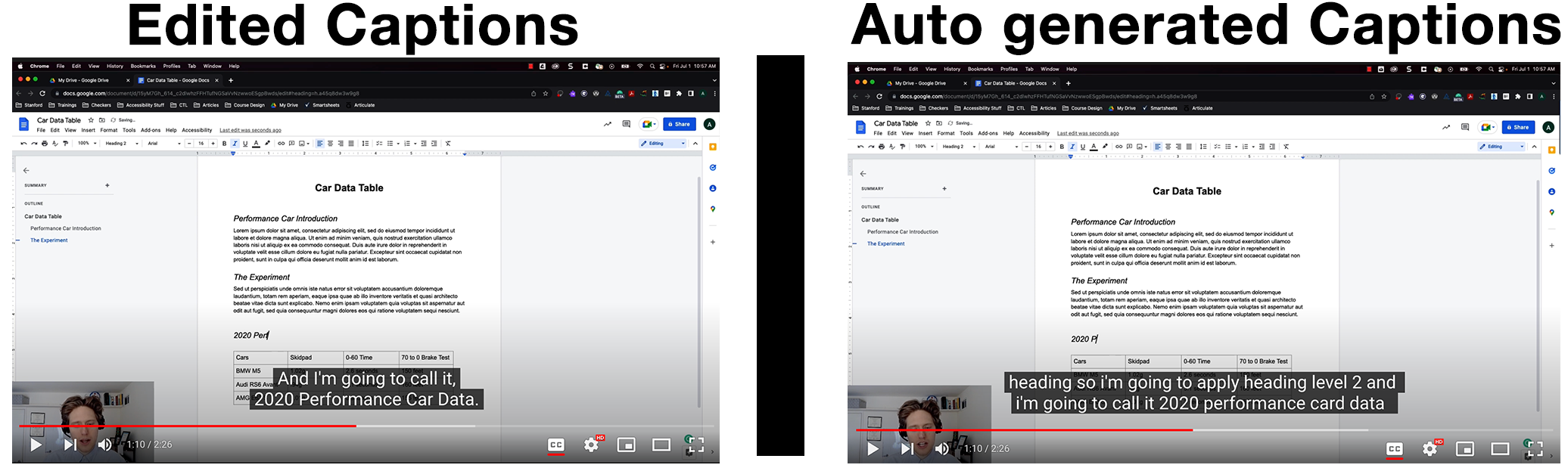
Captioning And Transcription Tutorial
Please watch the video below to learn why it is important to use captioning and transcription.