 University IT
Recent Examples of Phishing
These are some examples of phishing emails seen on campus. Do NOT assume a suspect email is safe, just because it is not listed here. There are many variants of each, and new ones are being sent out each day.
Are you available?
Please see article on Stanford News for information on the gift card scam: https://news.stanford.edu/2019/02/14/beware-gift-card-sextortion-scams/
Hi,
I’m in a meeting right now and that’s why I’m contacting you through email. I should have called you, but phone call is not allowed during the meeting. I don’t know when the meeting will be rounding up, I want you to help me out on something very important right away.
On Jul 13, 2019 12:05 PM, John Doe <jdoe.stanford@gmail.com> wrote:
Available?
--
Chair
John Doe
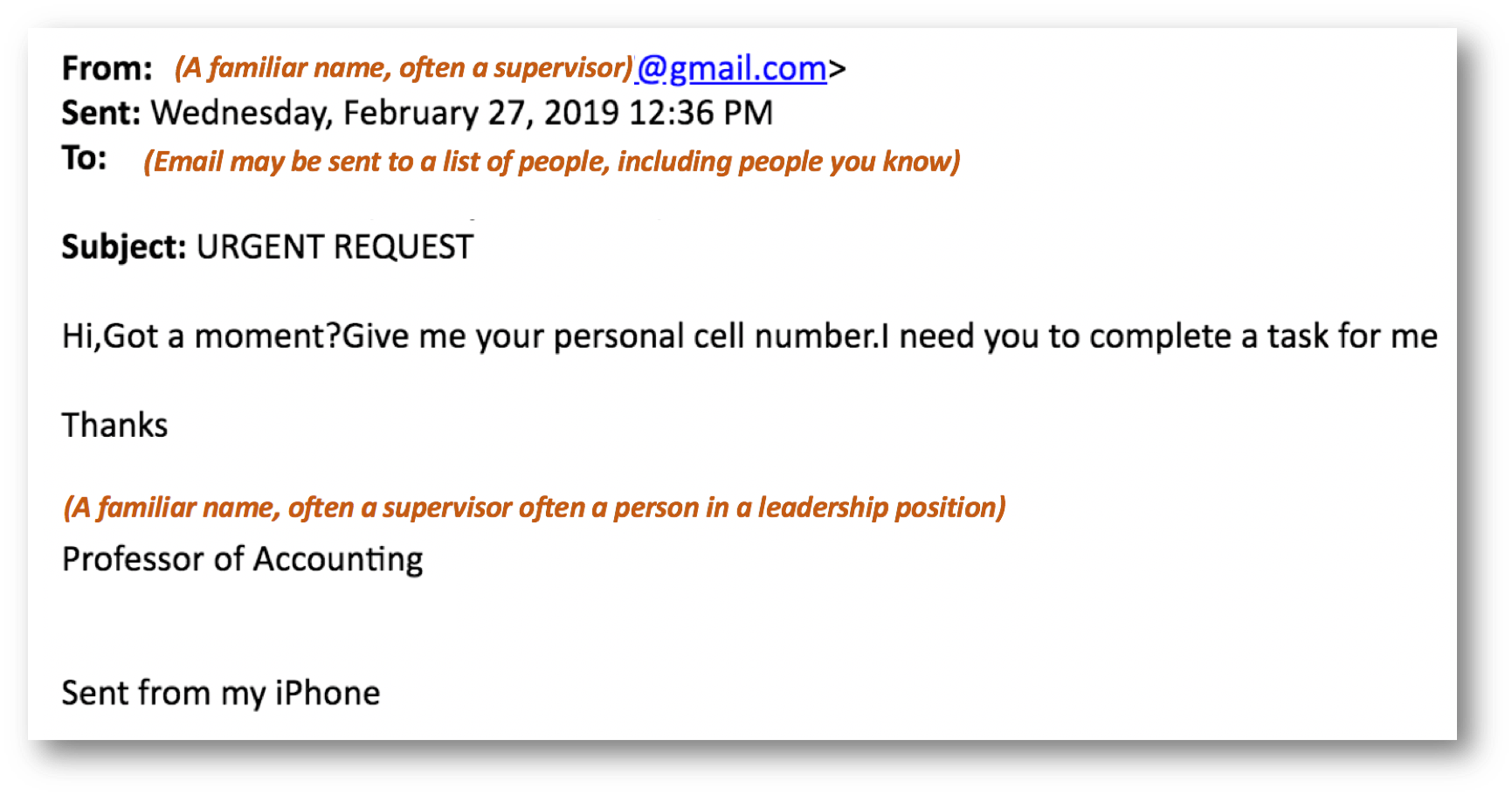
URGENT REQUEST
This is a variation of the gift card scam. Please see: https://news.stanford.edu/2019/02/14/beware-gift-card-sextortion-scams/
Job Offer
Fake job offers will attempt to collect personal and banking information. In this instance look at the reply to field for a solid red flag: Reply-To: Walgreens <norelpy@jobs.wlagreens.com>
From: Walgreens <consumer@e24653.f.akamaiedge.net>
Date: July 16, 2019 at 09:06:22 PDT
To: Undisclosed recipients:;
Subject: Job Offer
Reply-To: Walgreens <norelpy@jobs.wlagreens.com>
Walgreens Secret Reviewers
We are looking for secret reviewers to rate their local Walgreens store!
No experience needed, just your honest opinion.
The task requires you to shop and evaluate our employees.
You will get paid to shop and you can keep the products.
You will be paid with amounts between $200-400 per assignment.
Reviewers are selected randomly every week and if selected, they will be contacted via phone or email.
Join our team by filling in the application form.
Join Us*
* If you have received this message inside your spam folder some links and other functionality might be disabled, move it to inbox folder in case you are having problems pressing 'Join Us'.
© Copyright 2019 Walgreen Co. All rights reserved.
You can unsubscribe from this list.
Open Opportunity
Beware of overly generous pay. Check the reputation of the email address with emailrep.io or similar tool.
From: Eve Marrs <evemarrs1941@gmail.com>
Subject: Open Opportunity
Date: July 11, 2019 at 4:05:22 PM PDT
To: undisclosed-recipients:;
Hello,
I am offering a post that only requires 1-2 hours, 2-3 days in a week, you can work at your convenience and earn 230 weekly. Respond for more details if interested.
Best Regards,
Eve Marrs
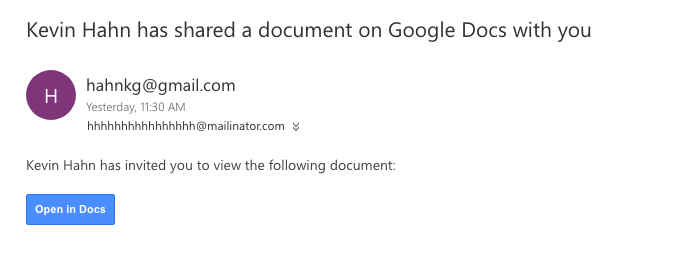
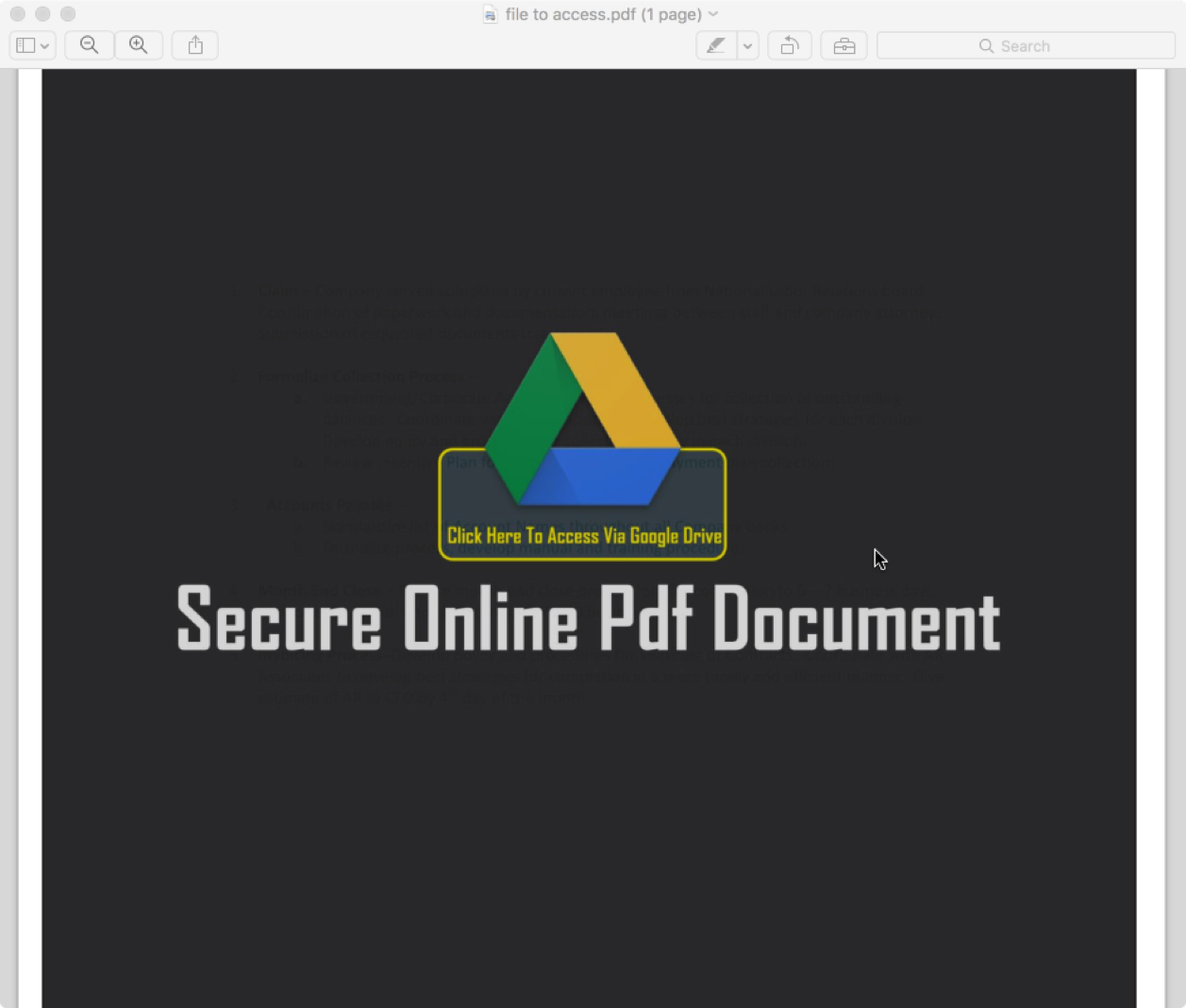
Email with Attached PDF
Note the inaccurate email address in the "From:" field.
From: Marc Tessier-Lavigne <jcerqueira@nafcs.org>
Subject: NEW DEVELOPMENT FILE TO ACCESS [DOCX.11] 31.01.12.2017
Date: January 31, 2017 at 8:30:41 AM PST
To: undisclosed-recipients:;
I am pleased to inform you that there will be a new development at the
Stanford University that will benefit all of it's members. You can read pdf
attached file for more information.
Thanks
Marc Tessier-Lavigne
Office of the President
Building 10
Stanford University
Stanford, CA 94305-2061
phone:(650) 723-2481
fax:(650) 725-6847
president@stanford.edu
Request for W-2 Forms and Earnings Summary
Note the inaccurate, non-Stanford email address for Marc Tessier-Lavigne in the "From:" field.
From: Marc Tessier-Lavigne <marctessier-lavigne@execs.com>
Date: January 20, 2017 at 7:45:30 AM PST
To: <kelly.wright@stanford.edu>
Subject: Imperative
Hi Kelly,
Kindly send me the individual 2016 W-2 (PDF) and earnings summary of all W-2 of our staff for a quick review. Prepare the lists and email them to me asap.
Best regards
Marc Tessier-Lavigne
Provost and President
Email Account Update
From: <mailadmin@stanford.edu >
Sent: Friday, Sept. 30, 2016 10:31 AM
To: <employee name>
Subject: Email Account Update
Due to migration to a new Open Source Email Collaboration Solution (SunsetGates), it is mandatory that you update your Stanford University information immediately, using the update link below:
http://update.sunsetgates.com/update/server/admindesk/index.htm
Failure to update, will result to closure of your account.
Thanks for your Co-Operation.
Email Admin Desk
Request
True sending account is: alabman566@gmail.com not jhennessay@stanford.edu.
President Hennessy's name is spelled incorrectly.
From: John Hennessay <jhennessay@stanford.edu>
Sent: Monday, May 2, 2016 11:31 AM
To: <employee name>
Subject: Request
<Name>,
Are you at your desk? I need you to send me an email attachment with the individual 2015 W-2 (PDF) and earnings summary of all the employees
Thank You
Sent from my iPhone