 University IT
How to Set Up Your Microsoft Login with Authenticator (Android)
These instructions are for the School of Medicine community.
What is Microsoft Authenticator?
The Microsoft Authenticator app lets you sign in to your Stanford Microsoft account by approving a request on your phone — no password needed. Learn more about this new login experience.
Prerequisite: Will you use this Android device for Stanford work?
Yes, I will.
If you will use this Android device for any Stanford work, including checking university email or accessing Stanford data, it must be enrolled in Intune before you begin. Enrollment creates the Work Profile used in the steps below.
- If you haven't enrolled yet, follow the Stanford UIT guide: Enroll your Android device in Intune.
- If you’re already enrolled, continue with setup.
No, I won’t.
If you will only use your Android as your authentication device and not for Stanford work or email, download the Microsoft Authenticator from the Google Play Store onto your personal or default profile (if you do not already have it downloaded ) and continue with setup.
- Download Microsoft Authenticator app.
- When done, continue with setup.
Work Profile vs Personal Profile
Device enrolled in Intune
After your device is enrolled, your apps are split into two tabs at the top of your app screen: Personal and Work. Tap the Work tab to access your work apps. Every app in your Work Profile shows a small blue briefcase badge in the lower-right corner of its icon — personal apps do not. Whenever these instructions refer to your Work Profile, make sure you are on the Work tab and that the app shows the briefcase badge.
Device not enrolled in Intune
If you are only using your Android device for authentication and not for Stanford work or email and have not enrolled the device in Intune, your apps will not be split into Personal and Work tabs. You will complete all steps in your default (personal) profile — no Work Profile is involved. 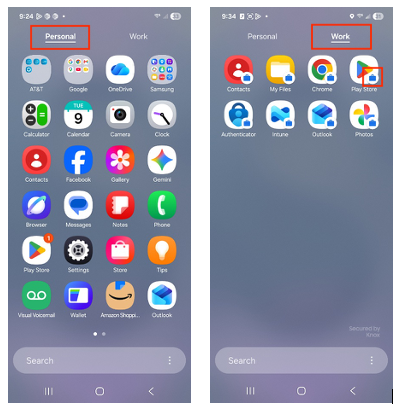
Personal tab (left) has no briefcase badge; Work tab (right) shows a blue briefcase badge on each app.
Before you begin: Set aside time to complete
You'll need:
- Your laptop or computer
- Your Android device (Already enrolled in Intune if being used for checking university email and other Stanford work)
- 15 minutes to finish the setup
Tips and reminders
- Internet connection: Ensure your phone has WiFi or cellular data.
- Keep both devices handy: You'll switch between your computer and smartphone during setup.
- Fully complete all four steps: Open the app (pre-installed in your Work Profile through Intune), add Authenticator as a sign-in method, add your Stanford account, and enable passwordless login.
Ready to get started?
Click each step to view instructions. Icons show whether you'll complete that step on your mobile phone or computer.
Complete all steps to complete your login setup with Authenticator
Allow up to 24 hours after completing setup for the new login method with Authenticator to appear.
Step 1: On your mobile phone, open the "Microsoft Authenticator" app.
If you are using this device for Stanford work:
Switch to your Work Profile and locate the application labeled "Microsoft Authenticator" (its icon shows a briefcase badge). It is deployed automatically through Intune, so you do not need to install it manually. If you do not see the app in your Work Profile after a few minutes, contact your IT support team.
If you are not using this device for Stanford work:
Open the Microsoft Authenticator app from your personal or default profile.Step 2: On your computer, add the Microsoft Authenticator app as a new sign-in method.
- Open a new incognito window or private browser session and go to: https://mysignins.microsoft.com/security-info.
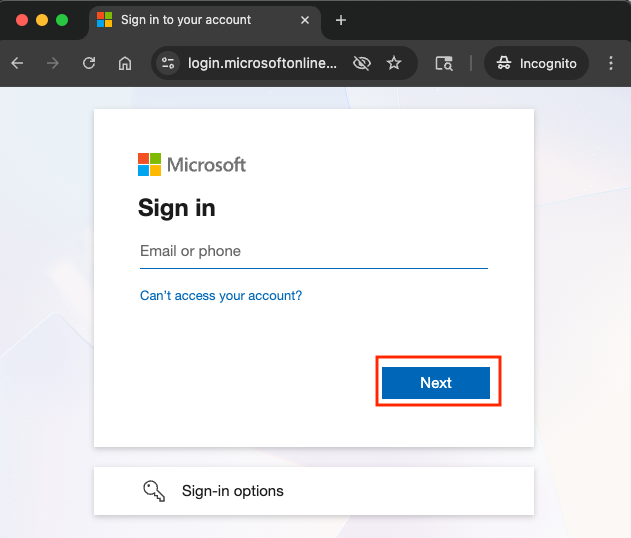
(Why incognito? This allows Authenticator to work with Cardinal Key.) - Sign in with your university email in the format: <your sunetid>@stanford.edu and select Next. You'll be prompted through the familiar Stanford login process via Shibboleth.
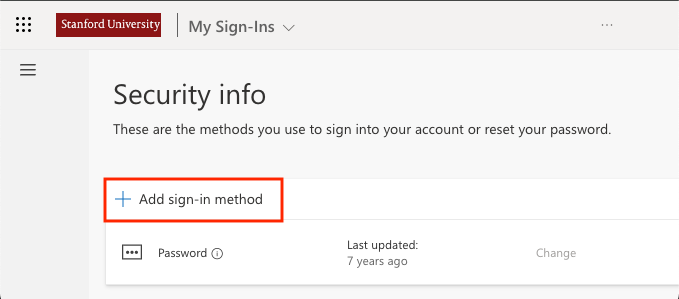
- On the "Security info" tab, select +Add sign-in method.
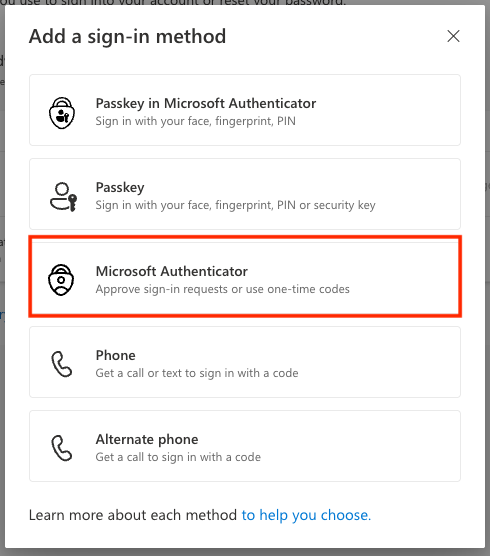
- Under "Add a sign-in method," choose Microsoft Authenticator.
- Click Next, then proceed through the prompts until a QR code is displayed.
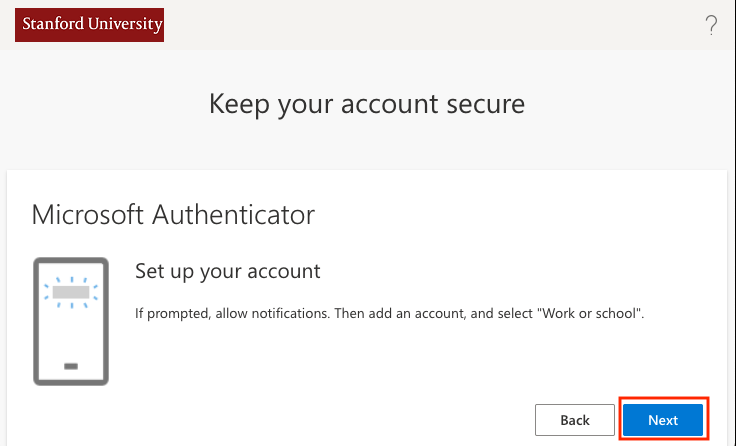
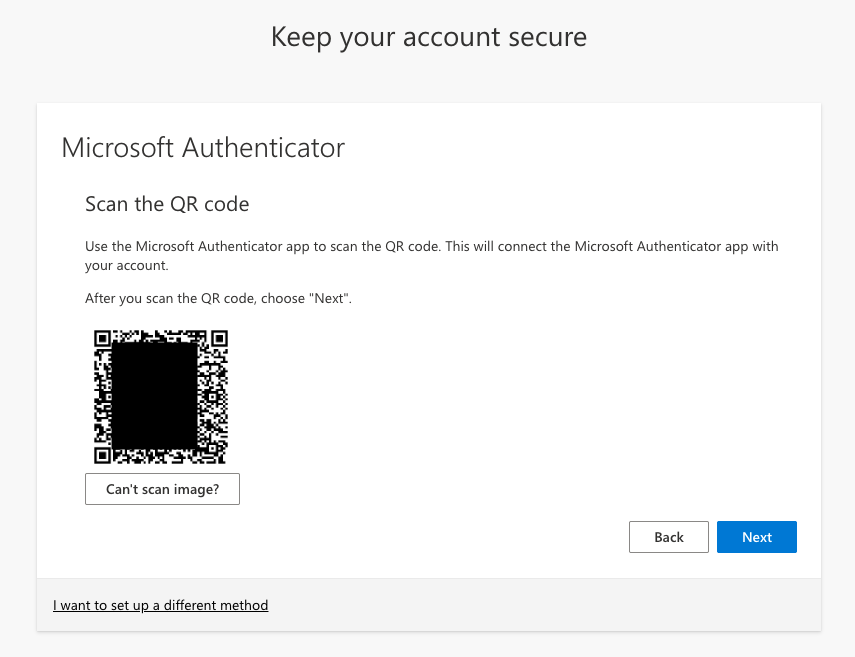
- Keep this window open! A unique QR code will be generated for you. You'll need to open the Authenticator app and scan it with your phone.
- Now it's time to switch to your phone.
- Open a new incognito window or private browser session and go to: https://mysignins.microsoft.com/security-info.
Step 3: Scan the QR code to add your Stanford account to Authenticator and enable passwordless sign-in.
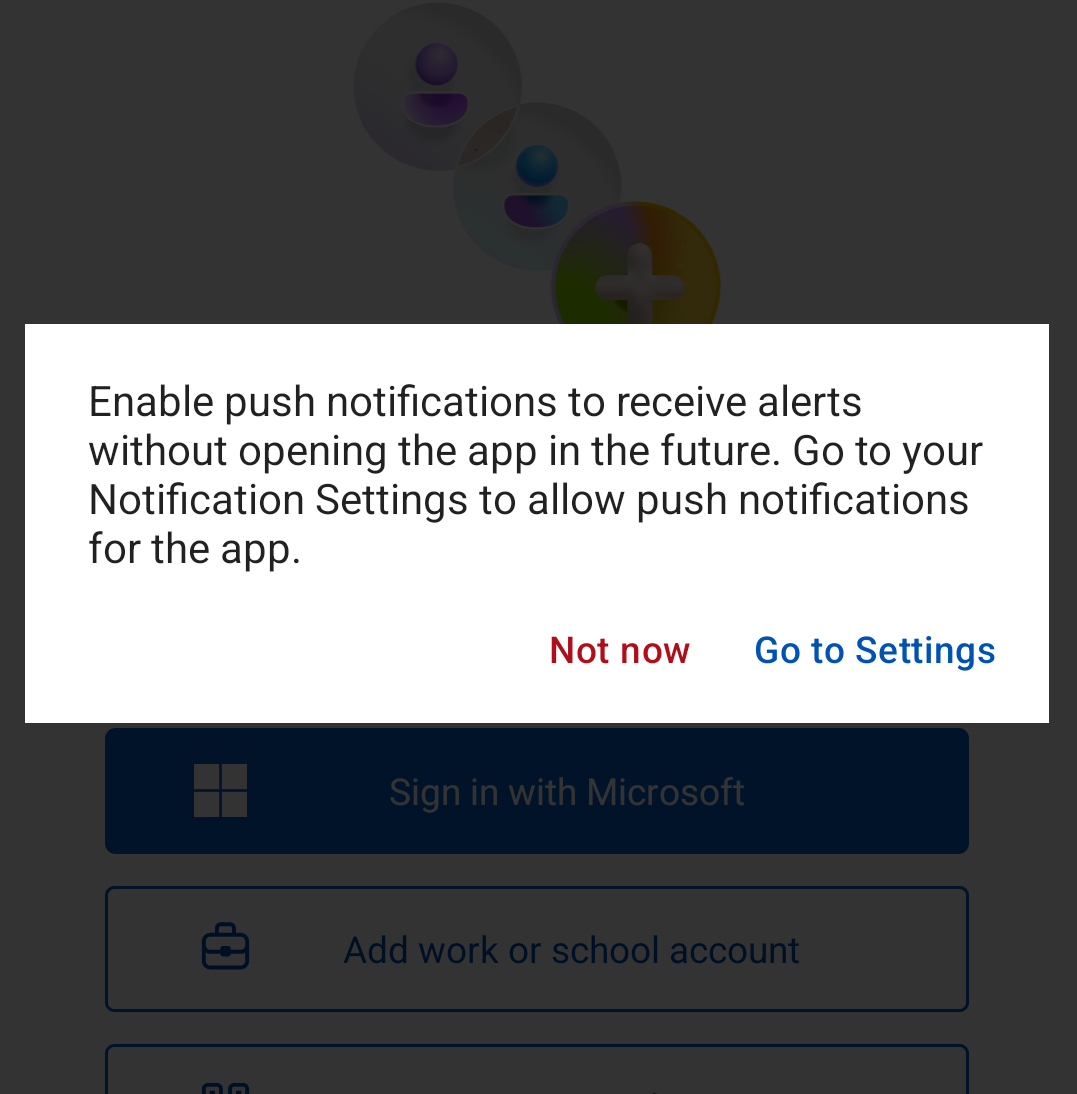
Note: If prompted to allow notifications, tap Go to Settings and enable them.
- Unlock your phone, switch to your Work Profile, and open the Authenticator app (it's icon shows a briefcase badge). Point your smartphone camera to the QR code displayed on your computer screen. The app will automatically detect it and add your sunetID@stanford.edu account to Microsoft Authenticator.
- Tap your sunetid@stanford.edu account in Authenticator.
- Your account should be displayed with a one-time password code that changes every 30 seconds.
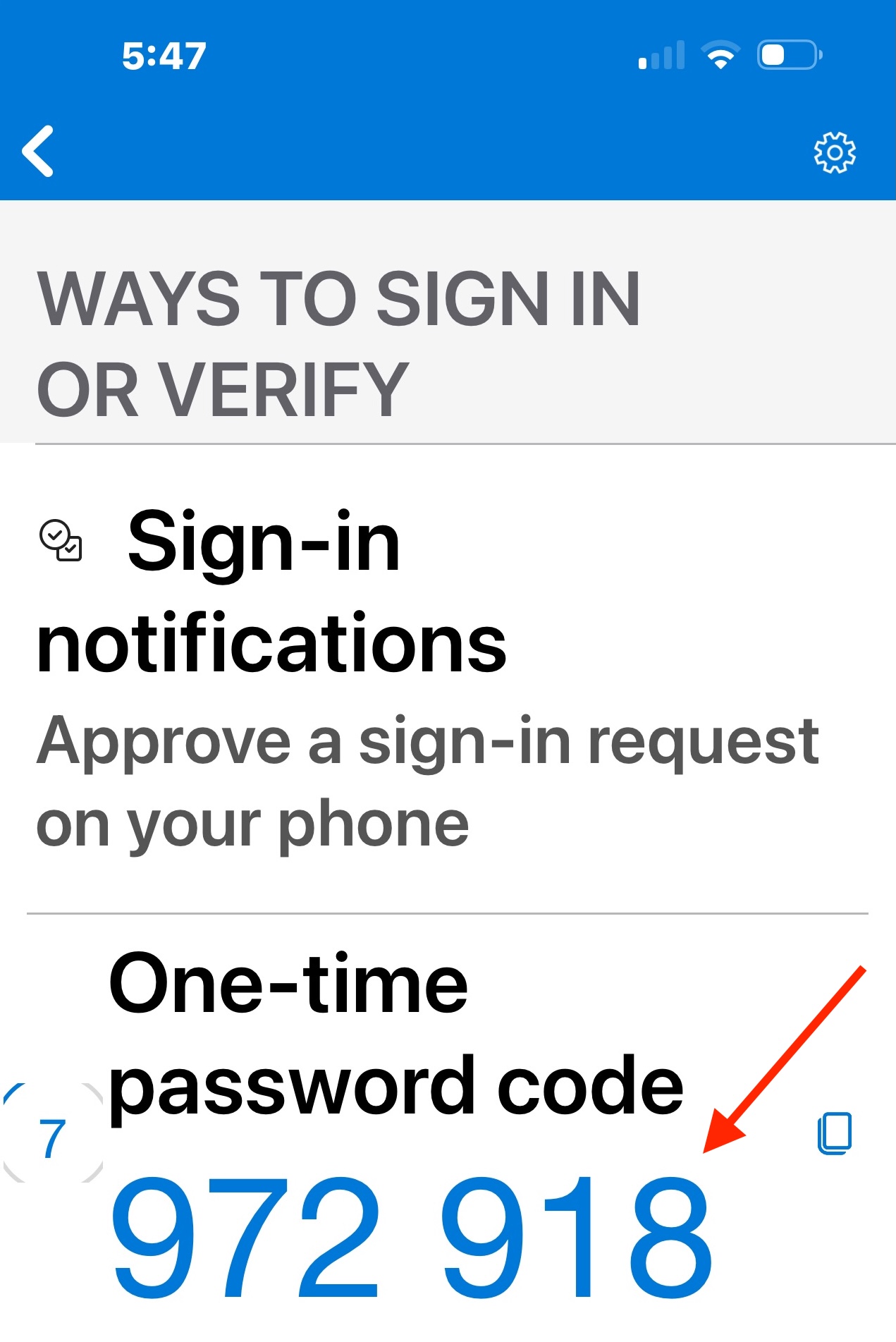
- On the screen, select the option to Set up passwordless sign-in requests. (You may need to scroll down the screen).
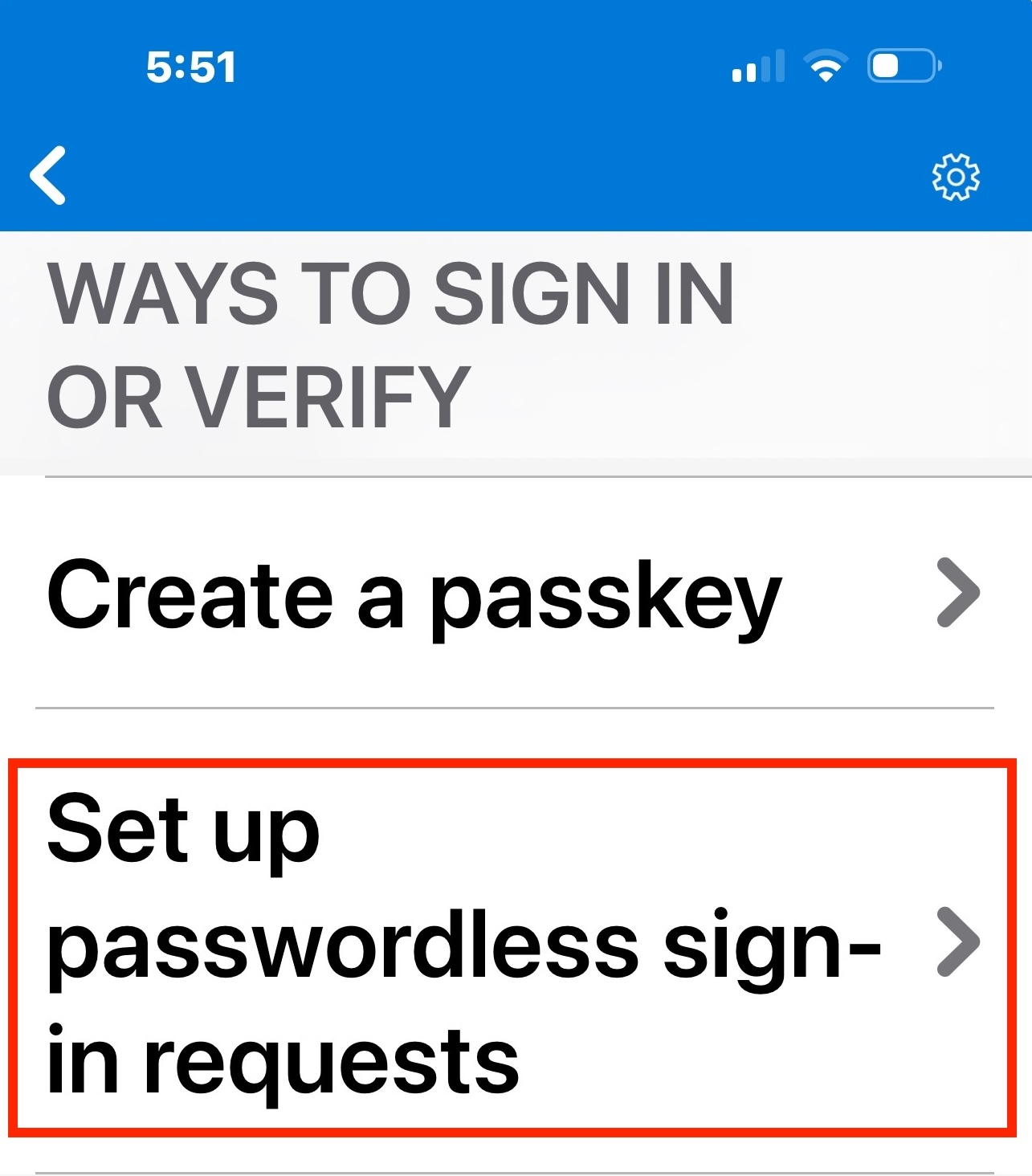
- Complete the indicated steps. If prompted to register the device, follow the on-screen steps to complete setup.
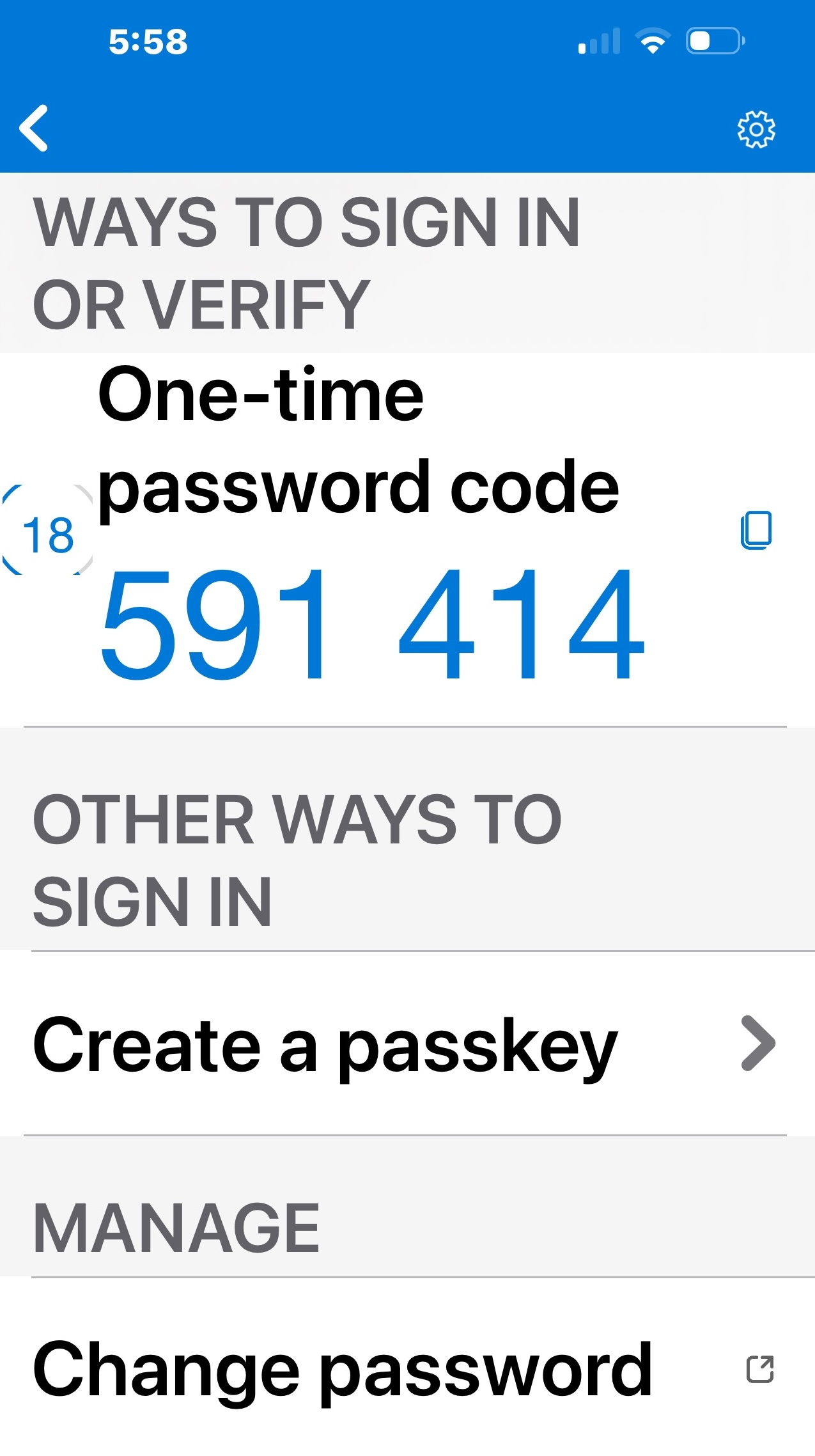
- When completed, your account in Microsoft Authenticator should look similar to the image below.
- The system will update within 24 hours and your login will be available to you. You'll know you've successfully completed the process when you sign in to your Stanford Microsoft account on a browser or app, and instead of entering a password you'll receive a notification on your iPhone. Open Authenticator, review the sign-in details, and tap Approve.
What happens next?
Once you sign into your Stanford Microsoft account using the new login process, you're ready to connect all the devices you use to check email (and access other university Microsoft services) to Microsoft Intune.
- Good news: Your Android device is already connected. You'll still need to connect your other devices, like your computer.
- Before you start: Wait 24 hours after setting up your login before connecting other devices to Intune, unless you are prompted to start sooner.
If you don't see the new login process appear 24 hours after completing set up, contact your local IT support.
Troubleshooting Tips
Didn't get the notification? Check that your phone is connected to Wi-Fi or cellular data. Also, ensure you have allowed notifications for the Microsoft Authenticator app in your phone's settings.
See also: If you are using your Stanford login with Microsoft apps, like Outlook, Teams, or OneDrive, installed on the personal side of your Work Profile on your Android, you'll need to take action. Learn how to move your Stanford Microsoft account to your Android Work Profile.
Need more help? Check out our FAQs.
More options
The Microsoft Authenticator app supports both passkeys and YubiKeys. After you complete the steps to set up passwordless login with the app, you can choose to set up either option based on your security and convenience needs.
Get help
For additional assistance, contact SoM Entra ID / Intune support using any of the options listed below:
- SoM TDS Service Desk: Call (650) 725-8000 (option 7), available 6:00 a.m. - 10:00 p.m., 7 days a week. Hours have been expanded to handle increased demand.
SoM Tech Bar: Schedule an appointment at the location nearest you.