 University IT
How to Configure Secure Client VPN for Apple iOS
Cardinal Key VPN for iOS is currently deprecated. To connect to the Stanford VPN (su-vpn) using an iOS device, please follow the steps below and authenticate with your SUNetID and password.
For clients accessing restricted library resources remotely, please use the "Stanford-Full" profile from your workstation when connecting to the Stanford VPN.
You can connect to the Stanford VPN (su-vpn) using your Apple iPhone or iPad. The Cisco Secure Client app is required.
Connect to Stanford VPN
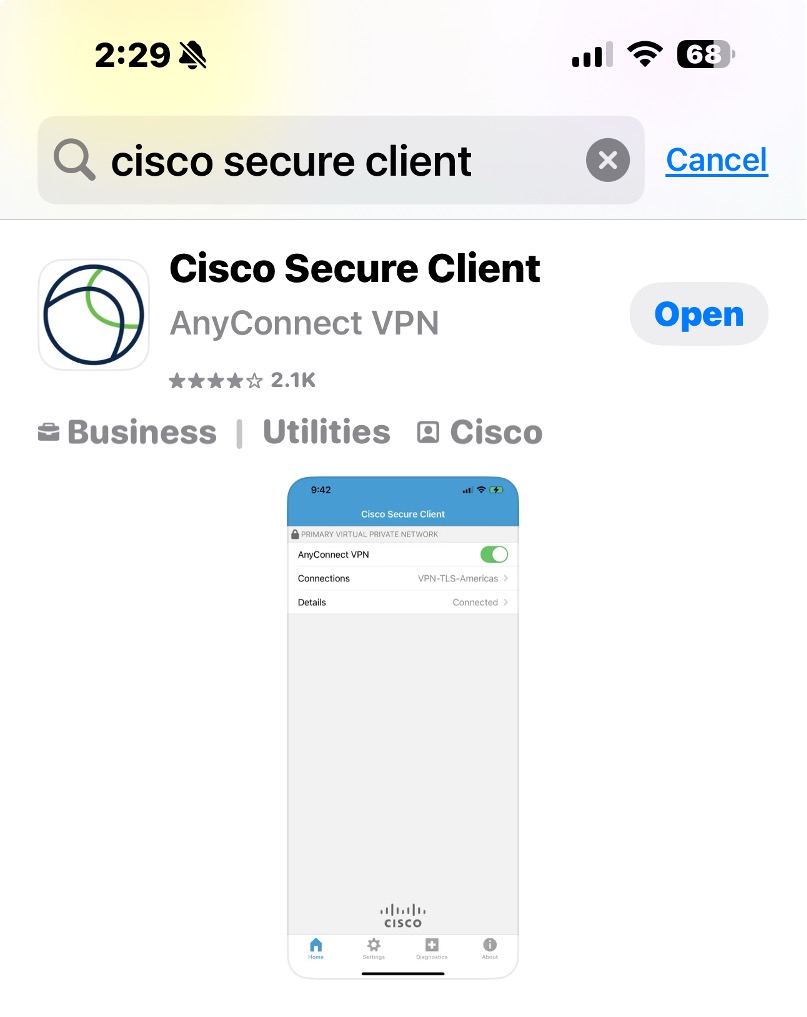
- Locate "Cisco Secure Client" on the App Store and download it.
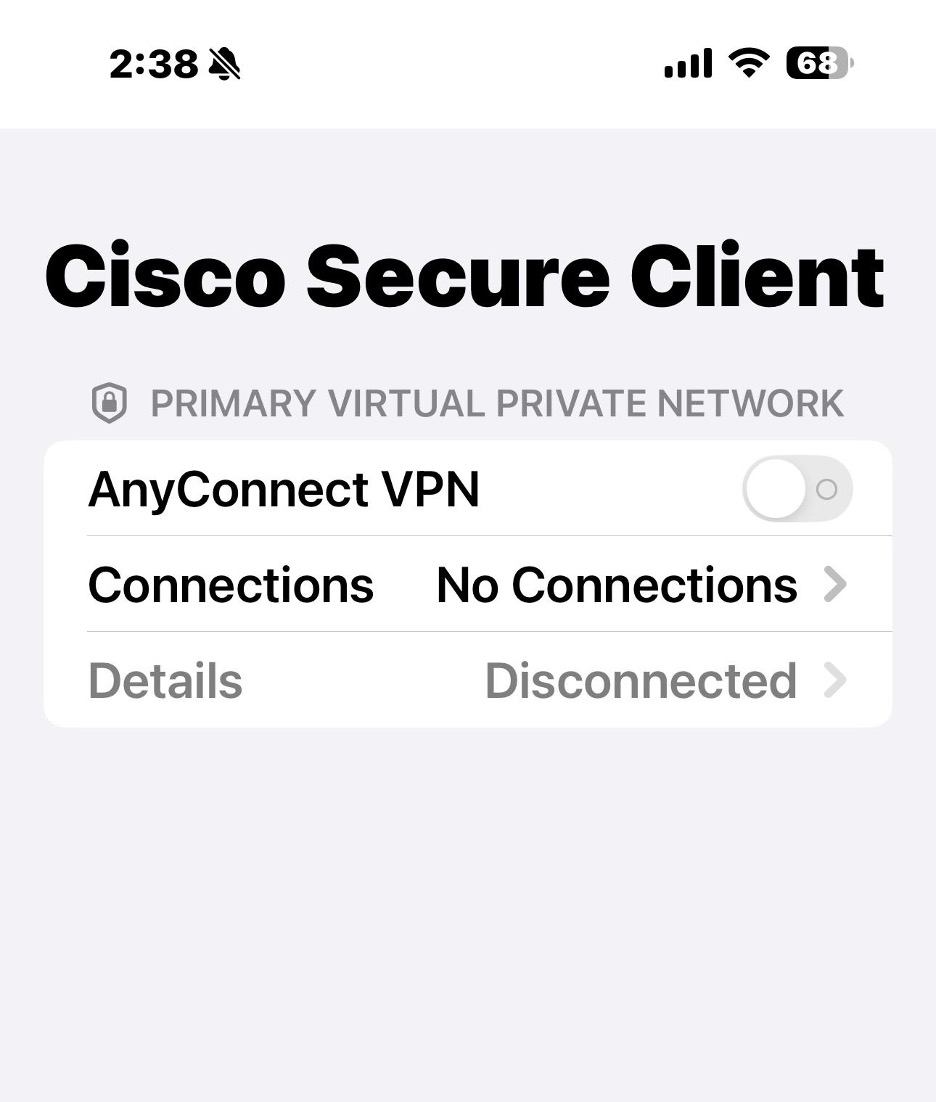
- Open the Cisco Secure Client app and select Connections.
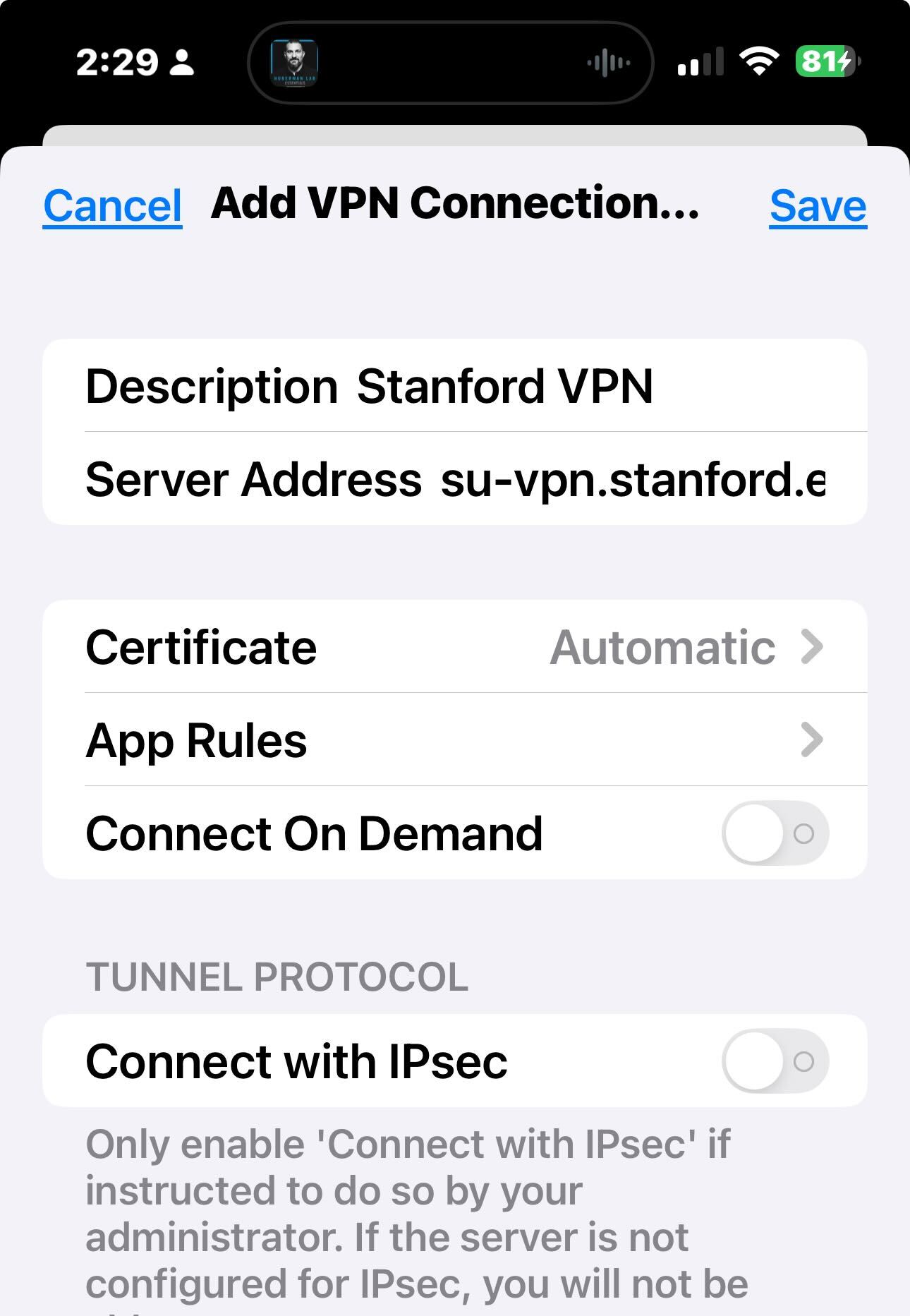
- Tap Add VPN Connection. Enter the following details:
- Description: Stanford VPN
- Server address: su-vpn.stanford.edu
- Certificate: Automatic (Select "Automatic" if it isn't already displayed)
- When finished, tap Save in upper right corner.
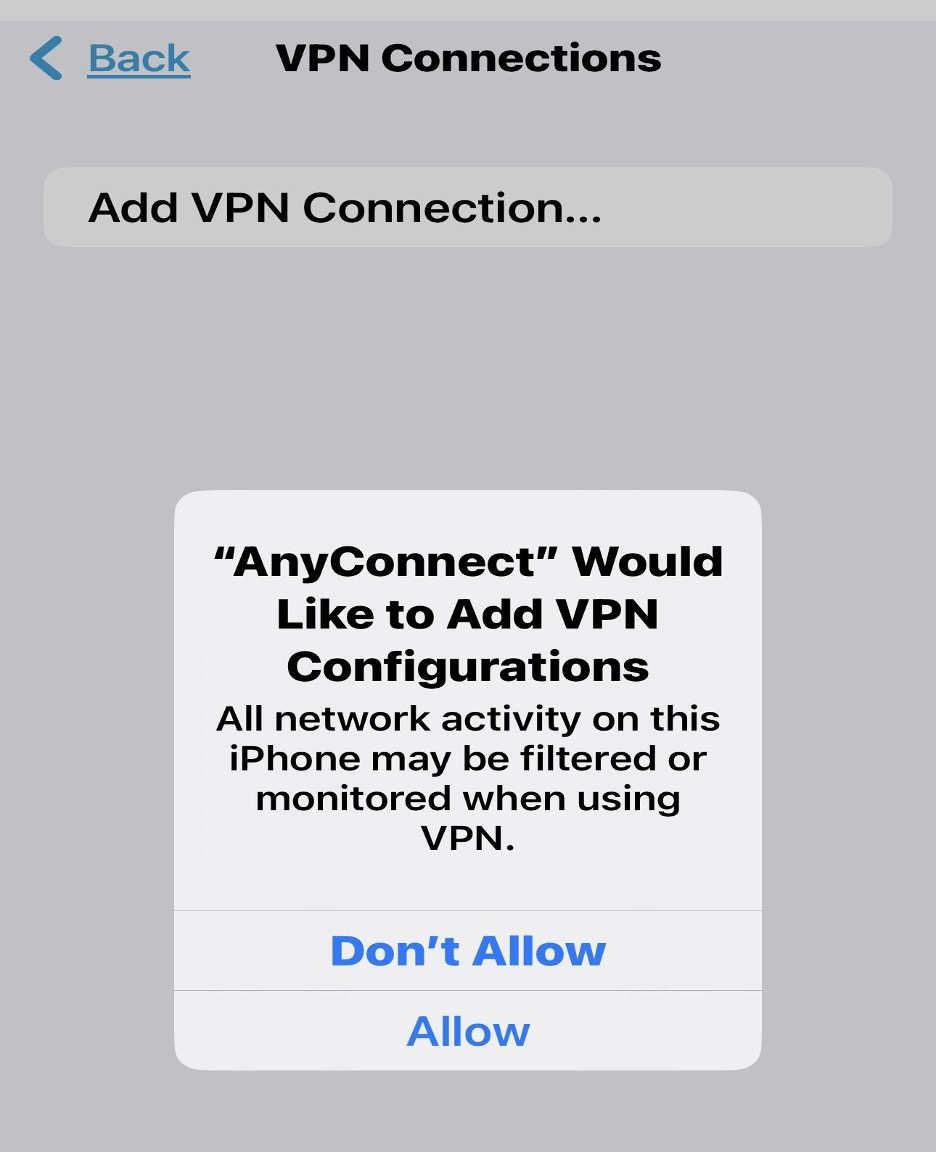
- Tap Allow to permit the Cisco AnyConnect app to add the VPN configuration.
- Authenticate using your device passcode.
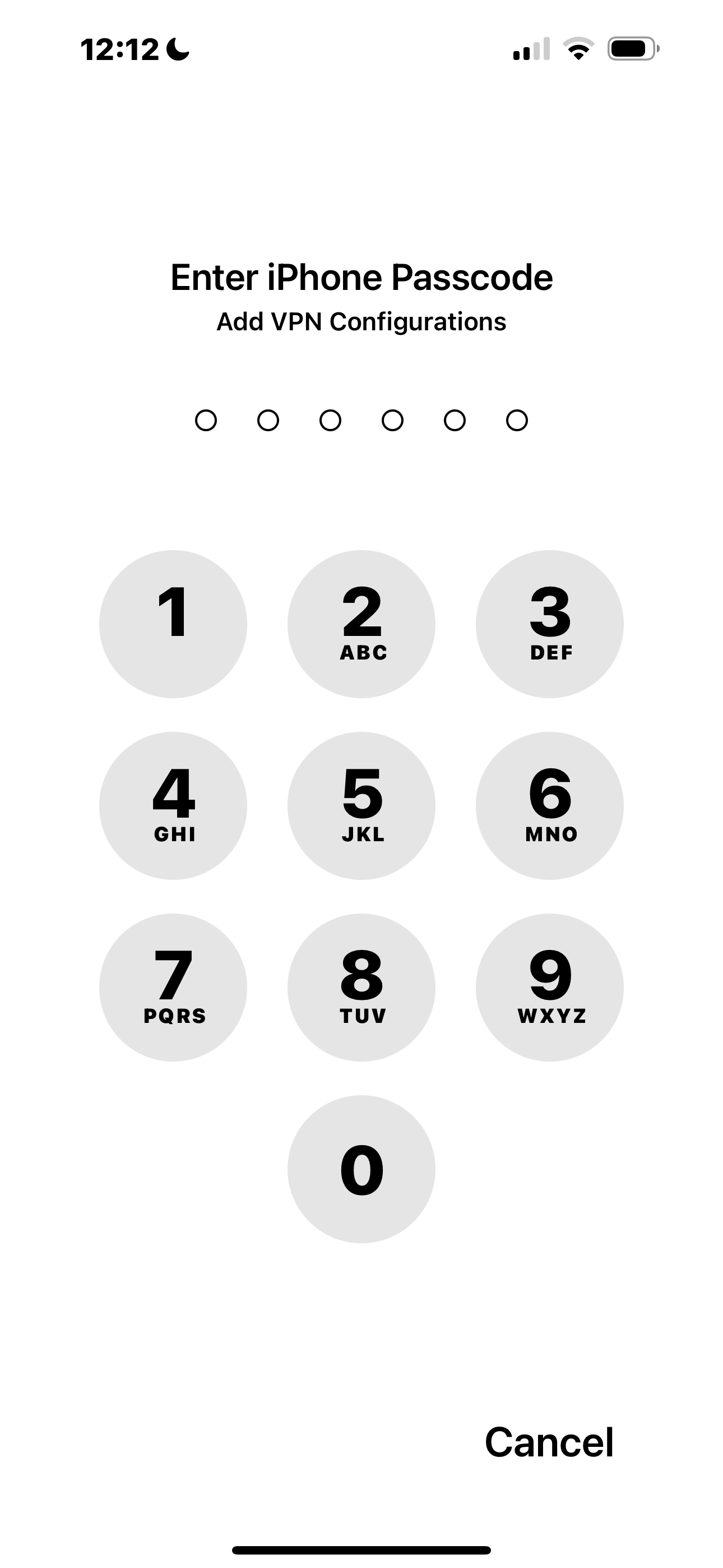
- After authentication, you should see a screen displaying the connection description and its status as "Enabled."
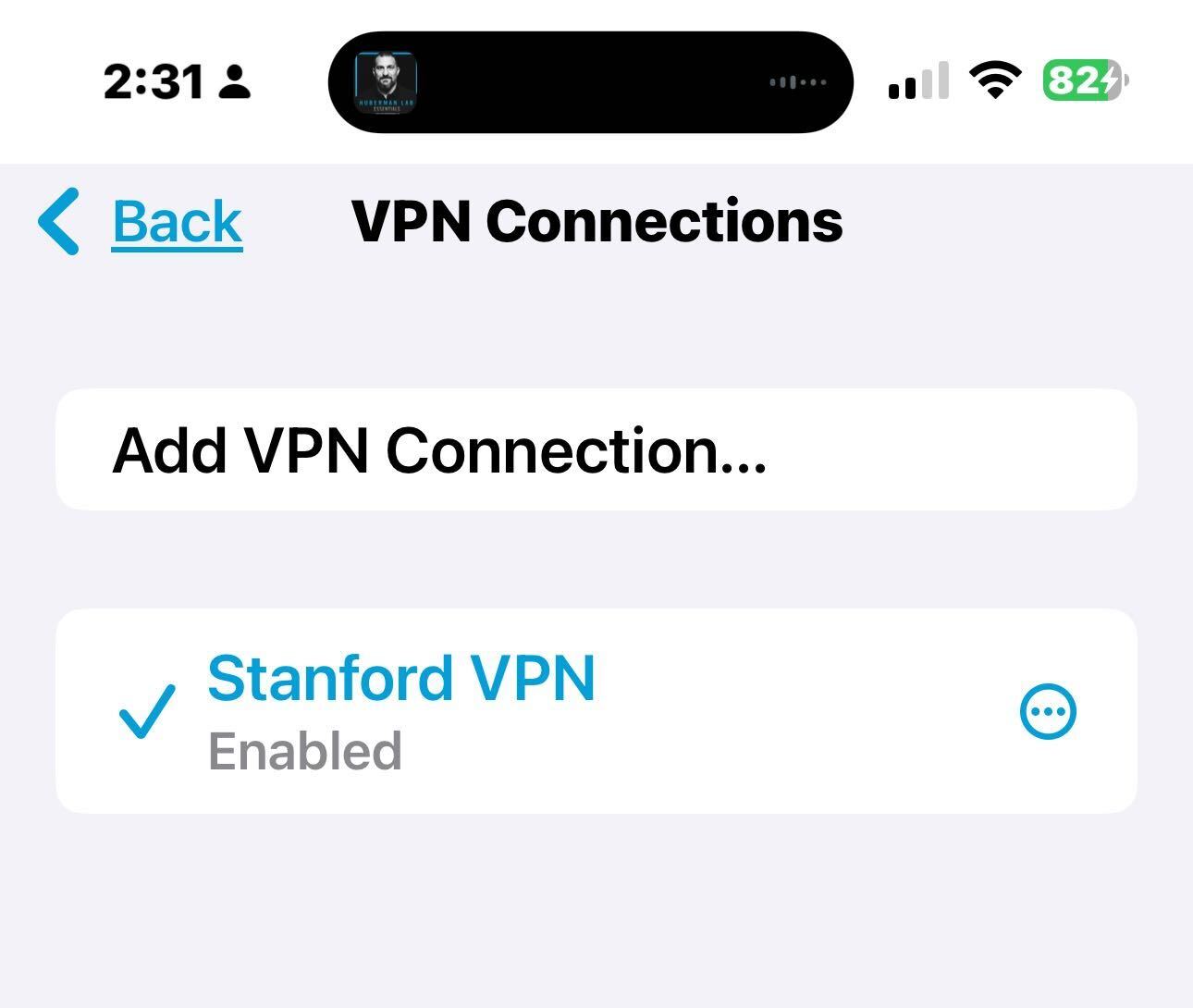
- Tap Back in the upper left corner. Stanford VPN should now be listed as the default connection.
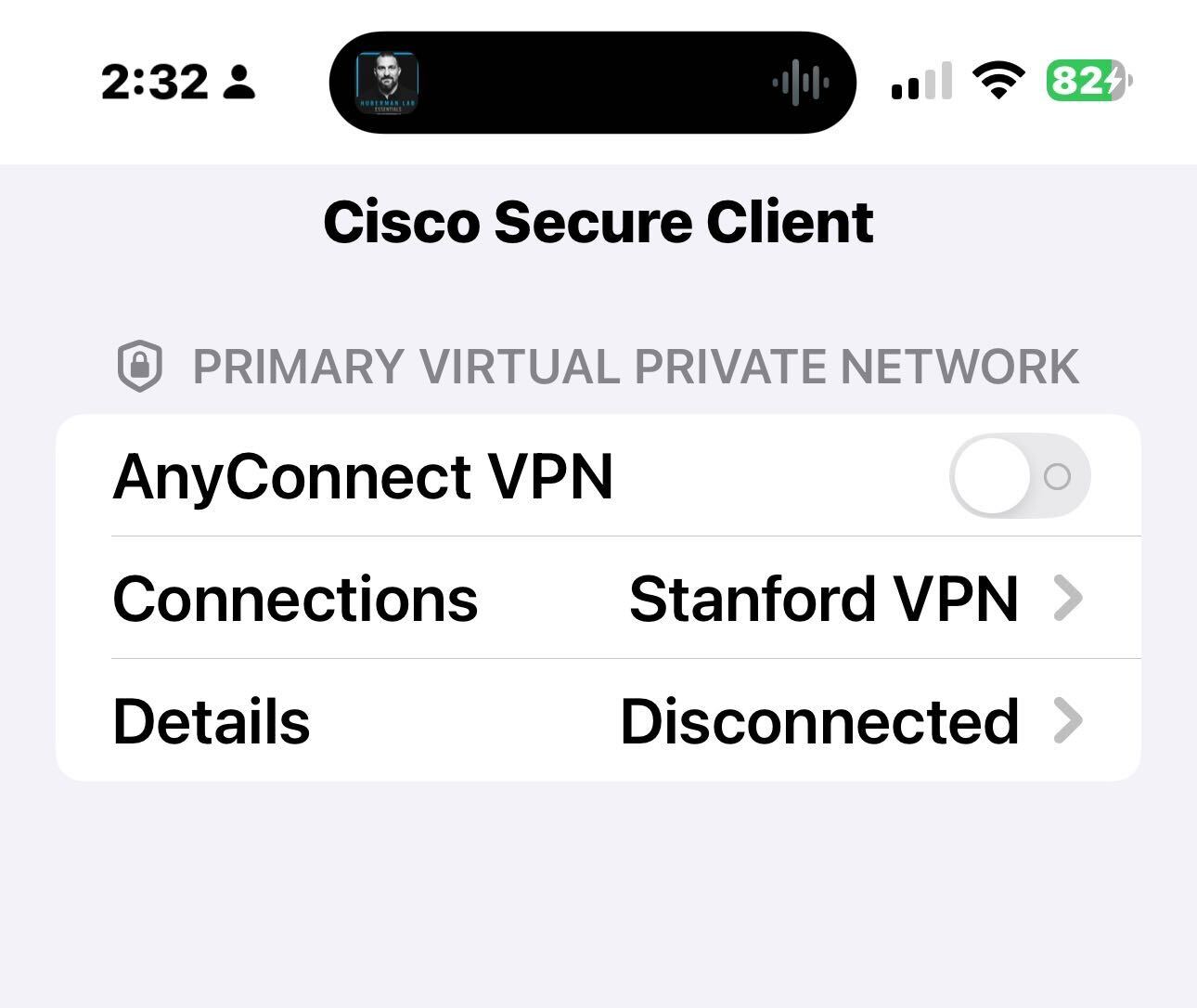
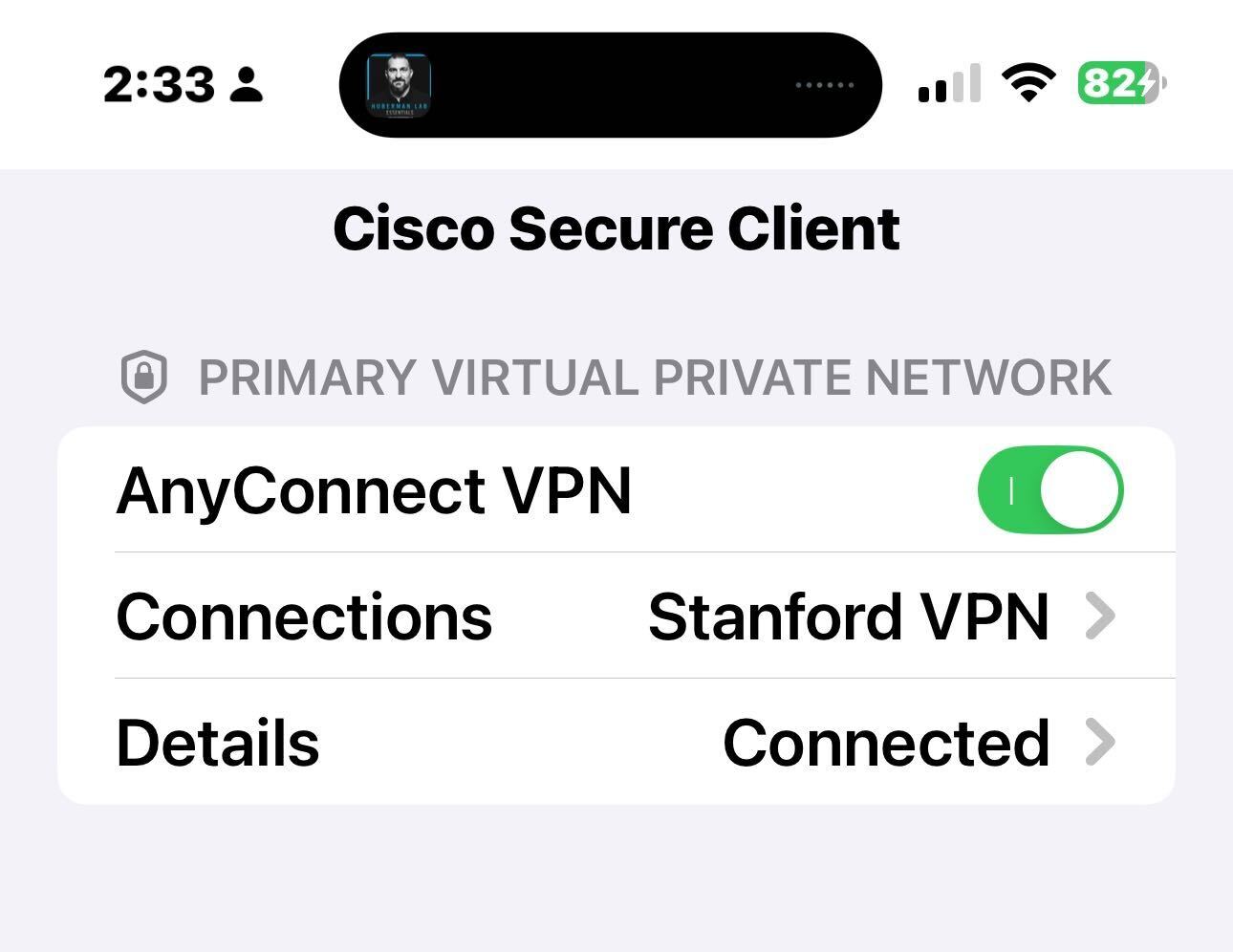
- To connect, toggle the button on the right side of AnyConnect VPN. You will be diverted to the SAML authentication page. Enter your SUNet ID and password, then tap Login to authenticate.
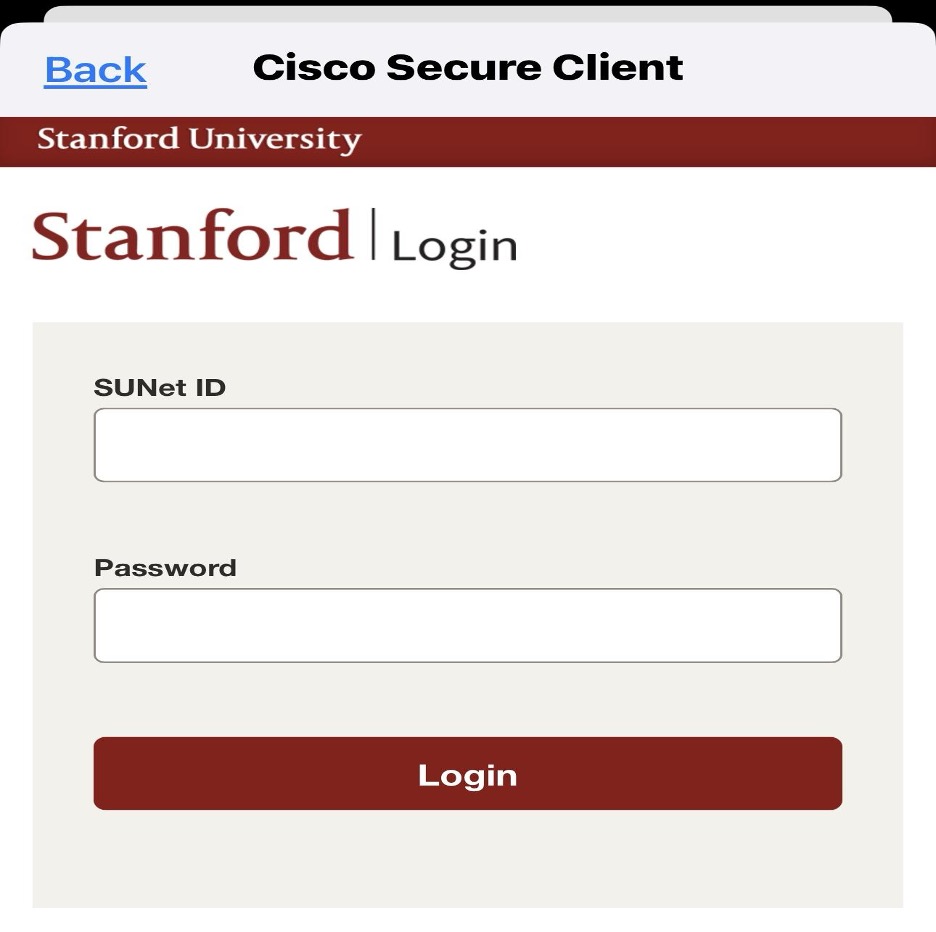
- You will receive a DUO push on your phone.
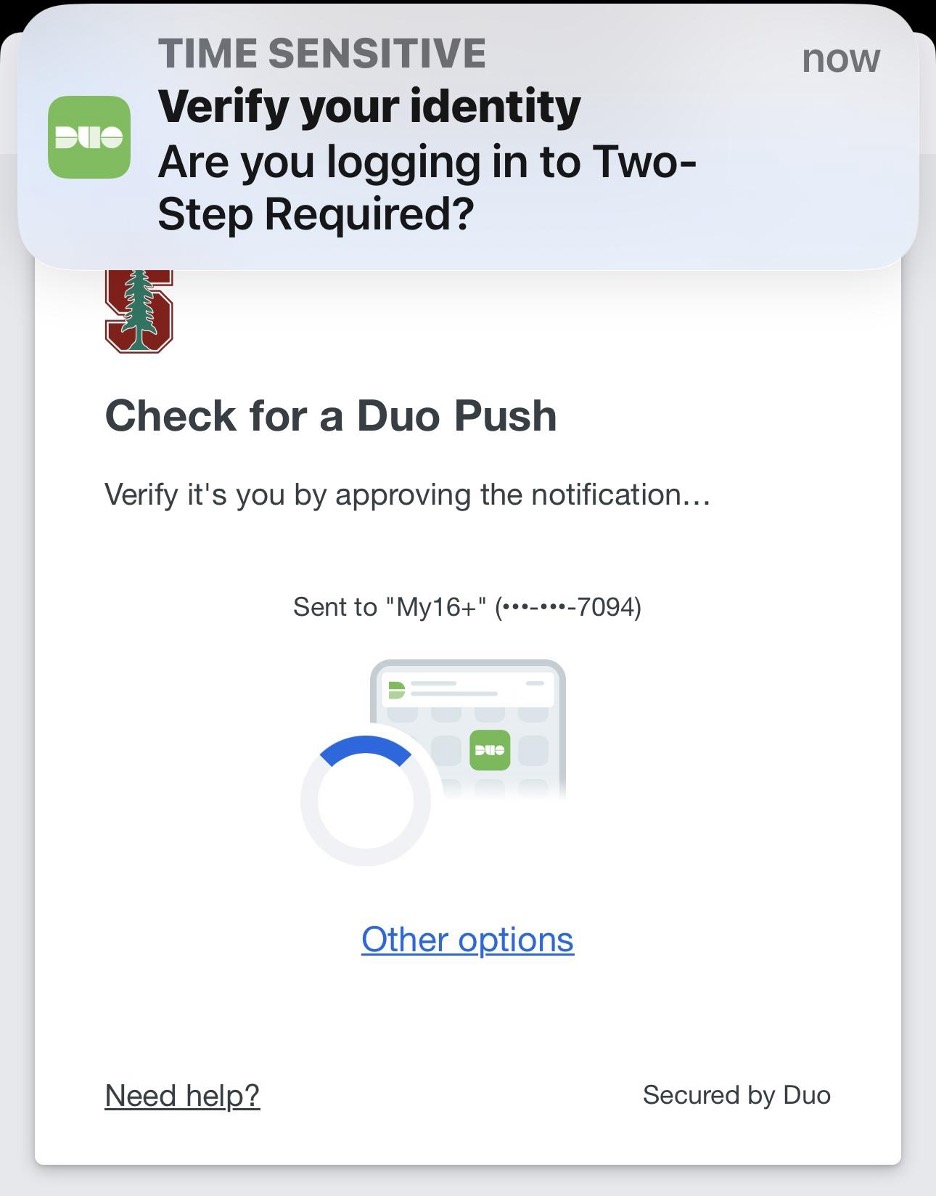
- Approve it and the Cisco Secure Client will connect automatically. Please note that if this is your first time installing the client and connecting to the Stanford VPN, then there may be a 15-30 second delay before the connection is established. Subsequent connections will be immediate.
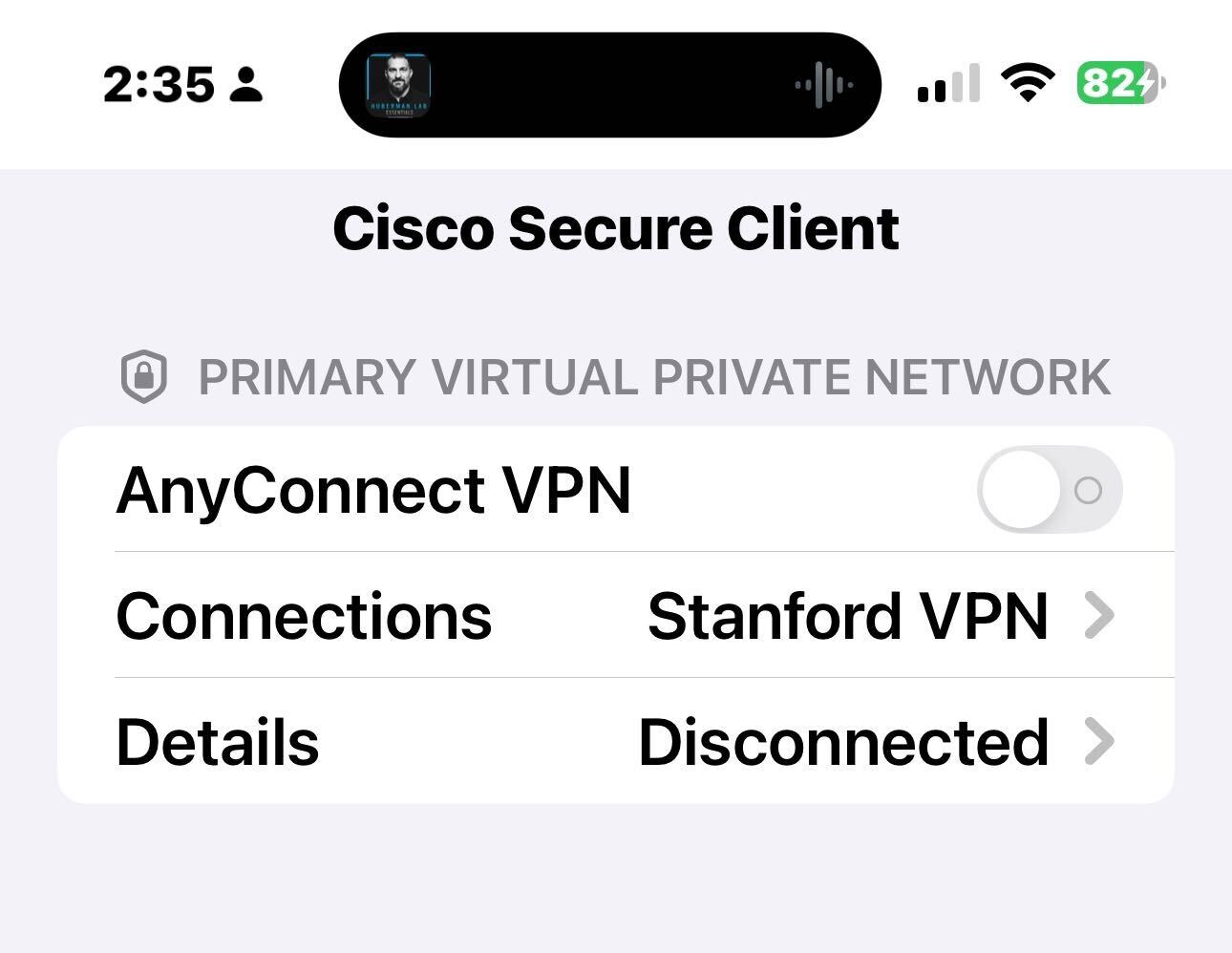
To disconnect, tap the toggle to the right of AnyConnect VPN.
To switch between a split-tunnel and a full-tunnel profile:
- Launch the Secure Client App
- Toggle the AnyConnect VPN slider to ON
- When the Stanford login page appears, select "Back" in the upper left corner of the screen
- You should then see the "Group" option where you can select one of the split or full tunnel profiles
By default, the "CardinalKey" profile is used, which is a split-tunnel profile. The above steps will allow you to select a different profile.
Last modified