 University IT
Introducing the COLT: Cellular-on-Light Truck
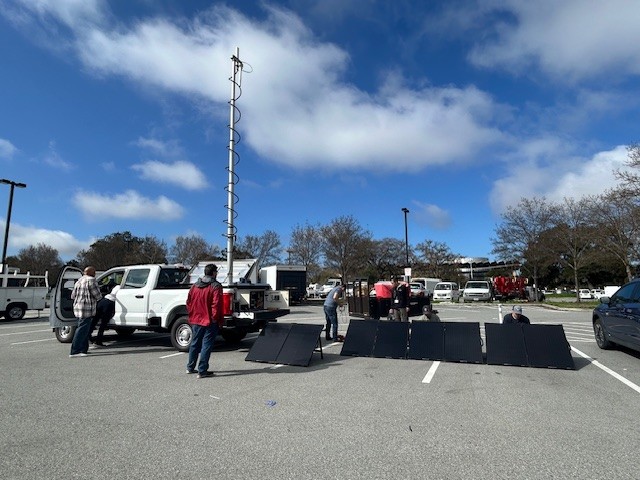
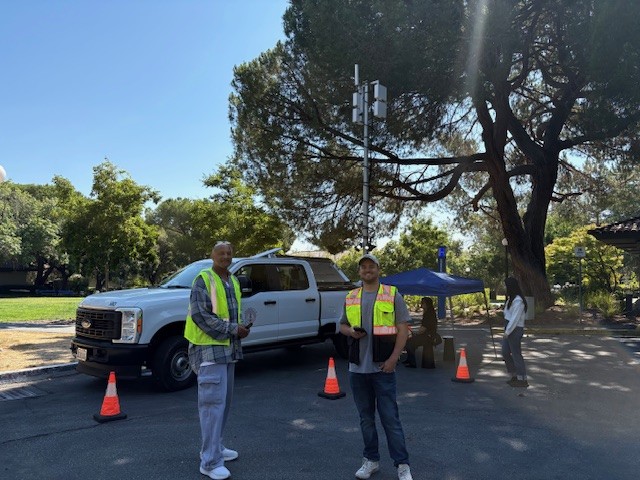
University IT (UIT) is rolling out a new Cellular-on-Light Truck (COLT). The COLT–– yes, an actual Ford F-250 truck––is a self-contained mobile unit equipped with cellular service, Wi-Fi, charging stations, and satellite internet. The COLT is designed to support first responders during emergencies such as power outages or the loss of cellular or network service.
Why is this important?
In 2022, Stanford experienced a prolonged power outage, interrupting cell and internet service for those on campus. Due to this outage, emergency responders faced challenges in communication and coordination, illuminating a critical need for an alternative to cell and internet service for emergency and operational needs.
What does the COLT do?
The COLT is powered by batteries, a diesel generator, and solar panels. These multiple power sources ensure the COLT remains operational and continues to support first responders during extended outages.
Cellular Service
The COLT is equipped with two AT&T radios and two Verizon radios, supporting up to 256 simultaneous calls—128 for AT&T and 128 for Verizon. In the event of a cellular outage, AT&T and Verizon devices within 250 feet of the COLT will automatically connect to its cellular service.
Wi-Fi
The COLT supports up to 64 devices on Wi-Fi through two portable routers. This service will be limited to emergency personnel and essential communications. Wi-Fi is password-protected and
can be accessed within 250 feet of the truck.
Mobile Charging
Along with providing cellular and Wi-Fi for mobile devices, the COLT is also equipped with four power strips to charge up to 32 devices simultaneously.
Satellite Internet
The COLT is connected to the internet via a Starlink satellite connection (100-200 Mbps download and 10-25 Mbps upload).
When is the COLT deployed?
The COLT is reserved for emergency events at Stanford. The Stanford Situation Triage and Assessment Team (STAT), managed by Stanford University's Office of Emergency Management, decides and prioritizes when and where the COLT will be deployed. At this time, only UIT STAT members can request the COLT on behalf of the STAT.
Who was on the project team?
This project, under the leadership of Sam Steinhardt, assistant vice president of IT Infrastructure, was made possible through the unwavering commitment, persistence, and resilience of the following UIT staff:
- Alex Chirov, director of Communications Technologies Engineering & Operations
- Becky Ablao, Mobile Infrastructure service manager
- Stephen Turner, Mobile Infrastructure engineer
- Austin Locy, Mobile Infrastructure operations analyst
- Chai Ho, UIT PMO project manager
DISCLAIMER: UIT News is accurate on the publication date. We do not update information in past news items. We do make every effort to keep our service information pages up-to-date. Please search our service pages at uit.stanford.edu/search.
What to read next:

Harvest Good Cyber Habits This October for Cybersecurity Awareness Month

Support for Legacy Outlook for Mac Ending