 University IT
Technology Solutions Alignment (TSA)
The Technology Solutions Alignment (TSA) team at Stanford University is dedicated to enhancing the institution’s teaching, learning, and research mission by aligning technology with strategic goals.
Led by Maria R. Inciong, our team of skilled analysts collaborates with faculty, staff, and students to streamline processes and implement innovative solutions. By bridging the gap between business needs and technological capabilities, we ensure that technology adoption is seamless and impactful, driving efficiency and transforming service delivery across critical university systems.
Mission
To bridge the gap between business objectives and technology capabilities by actively facilitating strategic alignment, ensuring that technology solutions directly support and enhance organizational goals, driving innovation and maximizing value through collaborative partnerships.
Vision
To be the driving force in seamlessly aligning technology solutions with strategic business needs, empowering our organization to achieve optimal efficiency, innovation, and growth through collaborative partnerships and data-driven decision making.
Meet the Team
Director
Serving as the Director of Technology Solutions Alignment is the culmination of my journey at Stanford that began in 1998. I draw from my experiences of working at various units across the university: Office of Undergraduate Admission and Financial Aid, University HR Information Systems, Student and HR Administrative Systems, and Middleware and Integration Services. Collaboration is a key part of my role— engaging with faculty, staff, students, and the broader Stanford community to assess the technology needs of the University.
Our team, Technology Solutions Alignment, aims to ensure alignment of technology solutions with the University’s goals. We strive to deliver technology solutions that contribute to Stanford’s teaching, learning, and research mission. We work to enhance the faculty, staff, and student experience at Stanford through effective and thoughtful integration of technology. We commit to identify and provide technology solutions that support efficiency, improve effectiveness, and transform delivery of services to the University.
Analysts
As an IT Systems Analyst at Stanford University, I bridge the gap between technical developers and the diverse needs of faculty, staff, and students. Since joining the Technology Solutions Alignment (TSA) team in 2017, I’ve brought a strong foundation in IT systems analysis and a deep understanding of business processes to every project. I work closely with stakeholders to translate their challenges into innovative, scalable solutions. My role is centered on collaboration—ensuring technology aligns with Stanford’s mission while enhancing efficiency and user experience.
Throughout my time at Stanford, I have led key initiatives such as the School of Medicine (SOM) Computer Inventory System, streamlining asset tracking and compliance, and Outreach Volunteer Alumni Link (OVAL), which optimizes the applicant recruitment process. By gathering requirements, optimizing workflows, and driving technology adoption, I ensure that IT solutions meet the evolving needs of the Stanford community while maintaining a seamless user experience.
I joined the Technology Solutions Alignment team in 2019 and have deeply appreciated the opportunity to learn more about Stanford and deepen my analysis skills. Much of my time at the University has been devoted to the Outreach Volunteer Alumni Link portal, which facilitates alumni interviews of undergraduate applicants to Stanford, and the Faculty Search and Applicant Tracking system, which is used to recruit new faculty to the University. More recently, I became an analyst for the Harmony program, which aims to modernize the broader suite of Faculty Affairs systems at the University.
I endeavor to develop a strong understanding of the systems we support so that we can work with our business partners to find creative, thoughtful solutions to their business problems. Like many of my colleagues, I see our team’s role as that of a translator: We facilitate collaboration between our business partners and our solution providers (whether vendors or Stanford developers). I care deeply about implementing technology solutions that align with business needs and ultimately support the work of our business partners.
My journey as a Systems Analyst in Technology Solutions Alignment is rooted in my experiences across various units across Stanford. I have contributed to diverse areas including Graduate Financial Planning System, Peoplesoft, Oracle Financials, SALLIE’s Digital Asset Management, Associated Student of Stanford University, UIT Vendor Management, and Middleware and Integration Services. This wide-ranging exposure has helped me understand the intricate relationship between systems, processes, and the needs of faculty, staff, and students.
In my role, orchestrating is essential to engage with stakeholders across the university to gather requirements, assess existing systems, and identify areas where technology can align. I am dedicated to aligning technology solutions with Stanford’s broader objectives. I focus on creating efficient and technology solutions that directly contribute to the university’s mission.
I am a Systems Analyst focused on improvement and automation projects, such as the UIT Vendor Management Database and the Office of Postdoctoral Affairs Collaboration Suite. To align business objectives with technology, I strive to understand and define the client’s business problem, and the importance of being a translator and change agent between the technical and the business sides of project teams.
Prior to joining Stanford in 2022, I worked at Cisco Systems for 20+ years. I led business tracks on large-scale IT projects, including Oracle ERP implementations and the launch of the initial e-commerce service suite. I managed teams that mitigated fraud and security risks that addressed process, policy, and systems gaps. Regardless of role or title, I honed and applied my problem solving, analysis, communication, and collaboration skills, which are critical in my career at Stanford.
I joined Stanford in 2022 as an IT Analyst in the UIT group and my current focus is the FSAT (Faculty Search and Applicant Tracking System). Prior to joining Stanford, I was a Senior IT Manager at Wells Fargo Bank for 20+ years.
I am a creative and visionary IT professional with several years of experience in the design and delivery of cost-effective, high-performance IT infrastructures and applications addressing complex business problems, while streamlining outdated manual processes.
I am focused, energetic and strive to be highly regarded by business partners, clients, and executive teams as a key advisor, creative problem solver, skilled leader and astute IT professional. I am an adept negotiator and relationship builder, with the ability to guide teams and initiatives through complex dealings, secure favorable terms, cultivate strategic partnerships, and fuse disparate interests for win-win outcomes. I am grateful to be in this position, utilizing my past experience and skills to deliver technology solutions for Stanford University.
In 2023, I joined Stanford University, bringing with me several years of experience in the fast-moving startup world. As a Systems Analyst, my work is all about alignment—making sure that technical solutions not only function but also serve Stanford’s broader institutional goals.
I believe that clarity and transparency are key to progress, and I work to ensure that every stakeholder has a shared vision of where we’re headed. Whether structuring requirements, mapping intricate workflows, or developing user stories, I prioritize collaboration, precision, and usability at every stage. This focus drives my work on projects like the Office of Postdoctoral Affairs Collaboration Suite and the Graduate Financial Planning System.
With an international perspective, I’ve seen firsthand how a thoughtful approach to system analysis and documentation can drive real change—boosting efficiency, strengthening teams, and ultimately improving how people interact with these systems.
I’m excited to be part of a team that’s shaping the future of Stanford through smart, user-centered solutions.
I joined Stanford in 2024 as a Systems Analyst with the Middleware and Integrations Services Team and moved to the Technology Solutions Alignment team in 2026. I have worked on several projects to enhance Stanford’s core applications such as Accounts, Sponsorship Manager, and MyDevices and I provide support for all registry based applications. My focus is to provide the best experience for our clients and to support the evolving needs of the University through effective application enhancements and implementations.
Prior to Stanford, I worked for California Casualty Management Company for 10+ years as a systems analyst and then a team manager. I worked extensively on the project to migrate from legacy applications to the Guidewire Enterprise platform, creating business and systems workflows and requirements, and managing systems implementations in a modified agile environment. I worked closely with the business partners to provide the best system solutions to meet regulatory requirements and the business needs.
I joined Stanford University in 2024 as an Application Developer intern with the Core Financials and Asset Management team. Since then, I’ve served as a Systems Analyst in the Middleware and Integration Services (MaIS) group, and now contribute to the Technology Solutions Alignment (TSA) team.
Throughout my time at Stanford, I’ve collaborated with organizational clients, students, staff, and stakeholders to enhance application implementations, streamline processes, and ensure seamless data flow. By partnering with colleagues across multiple teams, I strive to bridge the gap between business objectives and technology capabilities, fostering strategic alignment and innovation to maximize the university’s value.
I began working with Stanford’s central IT organization in 1995 and have served in analyst capacities supporting campus offices and users ever since. One of my favorite early roles was serving as a liaison between business office development teams and central IT, where I helped define requirements for tools to move data from Stanford’s proprietary SPIRES database into relational databases, improving how that data could be queried, integrated, and reported across systems.
I have spent most of my time at Stanford providing operational and project support for Middleware and Integration Services (MaIS) applications and services, with a particular focus on the Registry’s person, organization, and group data. In that work, I translate client needs into integrations and functionality that support business processes and help others get their work done. I take a client-service approach and strive to be a reliable, collaborative partner across the Stanford community. I am excited to bring my experience and institutional knowledge to the Technology Solutions Alignment (TSA) team in support of the Stanford community and its mission.
Before joining Stanford, I spent more than 10 years at IBM as a Systems Engineer delivering large-scale systems and database solutions for clients in the financial, aerospace, and semiconductor industries.
Our Journey
Since our formation in 2017, through collaboration with stakeholders across the university, we identify opportunities to streamline processes, improve efficiency, and implement innovative solutions that transform service delivery.
2026
2025
- FSAT replacement/Interfolio implementation
- OVAL Matching Algorithm redesign
- OPA Unified Workflow Implementation
- Creation of TSA website
2024
- OPA Collaboration Suite
- FASED
- SALLIE Replacement
2023
- OCRO Vendor Requirements
- AARF - School of Engineering
- FARM - School of Engineering
2022
- SALLIE Upgrade
- Vendor Management Database
2021
- Resource (Staffing) Management in PPM
- FSAT
2020
- Cardinal Print
- CMDB
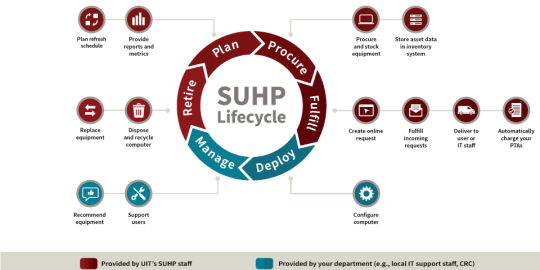
- SUHP
- OVAL Phase 3 (Events)
- GFPS Cloud Migration
2019
- OVAL Phase 2.1
- SOM Computer Inventory Phase 2
- GFPS Phase 2
2018
- OVAL Phase 2
- SALLIE Web Module
- SOM Computer Inventory Phase 1
2017
- ServiceNow Advanced Reporting Strategy
- OVAL Phase 1
- ASSU GrantEd
Our Approach and Frameworks
Viewing content requires authentication via Stanford SUNet
Discovery & Problem Definition
Phase for everything that helps understand the current problem and future vision:
Planning & Feasibility
This groups items related to selecting a vendor and securing funding:
Initiation
All documents needed to officially kick off the project:
Solution Design
Designing the future solution from a technical/functional perspective:
Build, Test & Train
Everything related to preparing teams and validating the solution:
Closure & Continuous Improvement
Wrap-up and learning phase:
Our Signature Deliverables
Our recent standout projects and services:
Outreach Volunteer Alumni Link (OVAL)
Stanford's OVAL Program is an initiative by the Office of Undergraduate Admission (UGA).
SALLIE (Stanford's Image Exchange)
SALLIE is Stanford's campus-wide system for managing and sharing digital photo assets used for communications.
Faculty Search and Applicant Tracking (FSAT)
The Faculty Search and Applicant Tracking (FSAT) system provides a centralized method for collecting applications for faculty positions at Stanford and tracking applicants as they progress through the search process.

Office of Postdoctoral Affairs Collaboration Suite
The Office of Postdoctoral Affairs (OPA) manages the Postdoctoral lifecycle through a centralized set of tools in Axess.
Graduate Financial Planning System (GFPS)
GFPS is a centralized tool for managing graduate student aid budgeting and forecasting.

Vendor Management - UIT Purchases and Contracts Database
The UIT vendor management team significantly improved its purchasing and contract lifecycle through the implementation of a centralized Oracle APEX database.

Harmony Program
The Harmony program is a collection of projects to evaluate and replace the systems that support the lifecycle of faculty and instructional, teaching, and research staff.

AARF & FARM
School of Engineering: Pega to Apex Transition
This project focused on transitioning critical faculty salary forms and workflows from Pegasystems to Oracle APEX for Stanford University's School of Engineering.